
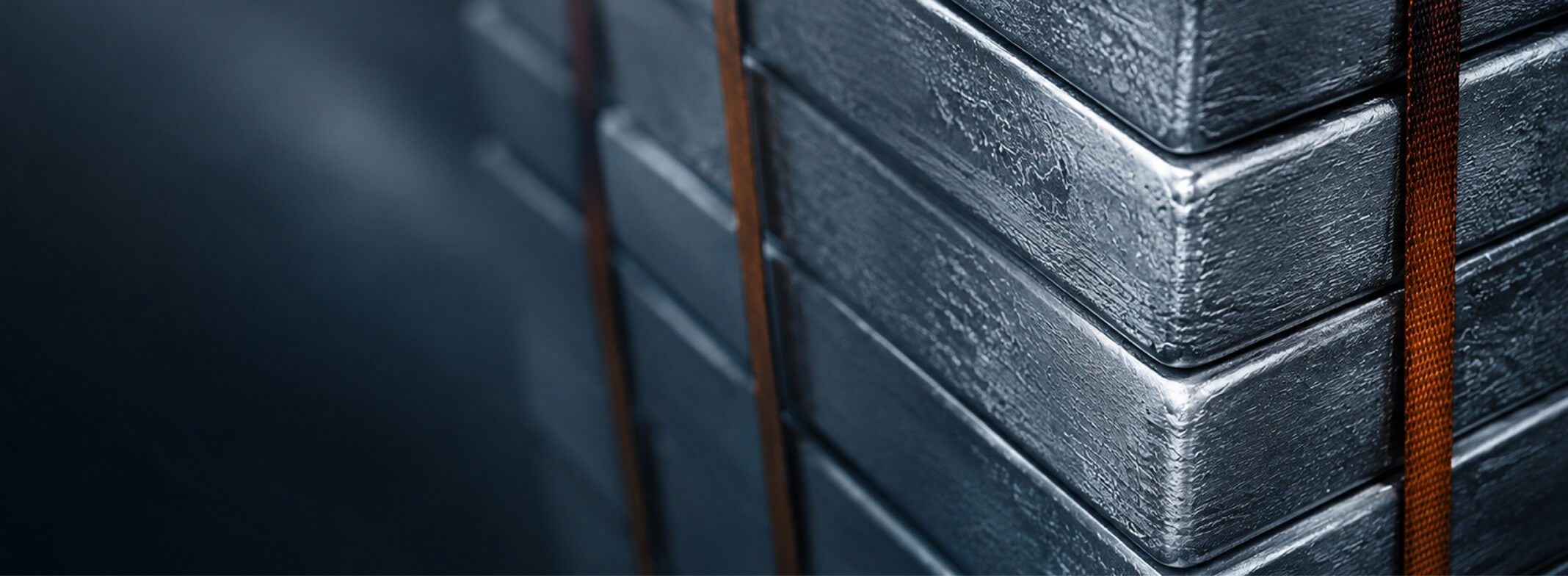
Extraordinary Performance.
Lighter Footprint.
WHY USE MAGNESIUM
Explore the Benefits
For automotive, commercial vehicle, and industrial applications, magnesium enables lighter, more efficient products with fewer parts, greater design flexibility, and strong potential for reuse and recycling.
LIGHTWEIGHT
Up to 75% lighter than steel and 35% lighter than aluminum.
HIGH PERFORMANCE
Exceptional strength to weight ratio for superior performance and efficiency.
DURABLE
Excellent castability; vibration damping, and corrosion resistance.
SUSTAINABLE
Recyclable and resource efficient for a better tomorrow.
DESIGN FREEDOM
Enables complex geometries and innovative applications.

Significant Weight Reduction
Magnesium is the lightest structural metal available, offering:
- 75% weight reduction vs. steel
- 33% weight reduction vs. aluminum
Reducing vehicle mass delivers measurable gains across:
- Fuel efficiency for internal combustion vehicles
- Extended range or reduced battery demand for BEVs
- Lower vehicle mass drives cascading weight savings
- throughout the entire system
Impact:
Replacing aluminum or steel with magnesium typically achieves 25–50% weight savings per component in equivalent designs.
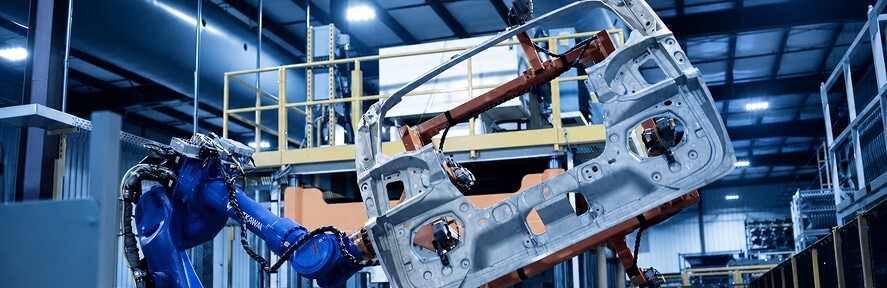
Superior Strength-To-Weight Ratio
Magnesium alloys deliver the highest strength-to-weight ratio of any widely used structural metal.
Ideally suited for:
- Load-bearing structural and semi-structural components
- Applications demanding high stiffness without added mass
Key automotive applications
- Instrument Panels / Front End Bolsters
- Seat frames
- Closure applications
- Transmission and gearbox housings

Strong Thermal Conductivity & Heat Dissipation
Magnesium alloys deliver:
- Higher specific heat than aluminum with comparable thermal
conductivity - Better absorption in cyclical thermal loading
- Better protection against thermal spikes
Target applications
- Transmission and gearbox housings
- Power electronics and inverter enclosures
- EV and hybrid thermal management systems (battery cooling,
motor housings)
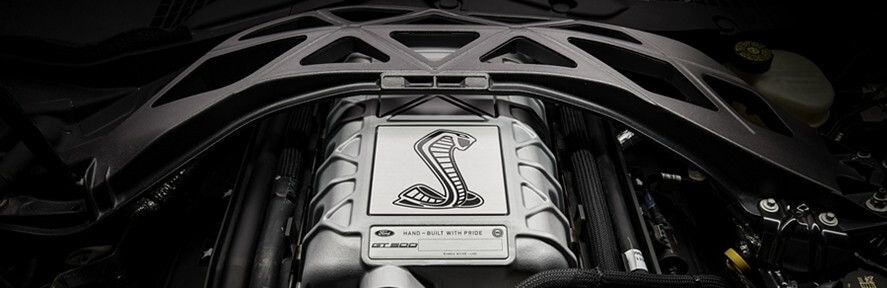
Outstanding Castability
Magnesium is ideally suited to HPDC thanks to:
- Low viscosity and density, which allow:
- Ultra-thin wall sections (down to 1–1.5 mm)
- Intricate and complex geometries
- Similar size parts can be cast in lower tonnage machines
compared to aluminum
- Tight dimensional tolerances with excellent as-cast surface finish
- Minimal secondary machining required
Result:
Greater design freedom and part consolidation—fewer components, fewer fasteners, lower assembly cost.
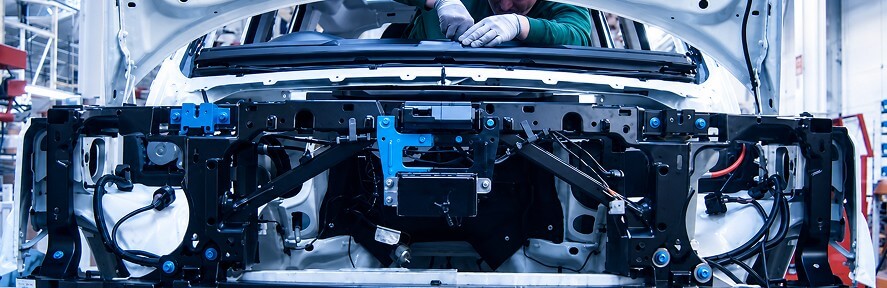
Part Consolidation & System Cost Reduction
Magnesium’s exceptional castability and stiffness enable:
- Consolidation of multiple stampings / extrusion assemblies into
a single die cast part - Improved NVH from single-piece structural integrity
This directly reduces:
- Overall part count and BOM complexity
- Manufacturing floor space, assembly time and labor costs
- Tooling complexity and potential failure points
- Welding, fastening, and secondary joining operations
System-level savings frequently offset the raw material cost of magnesium.
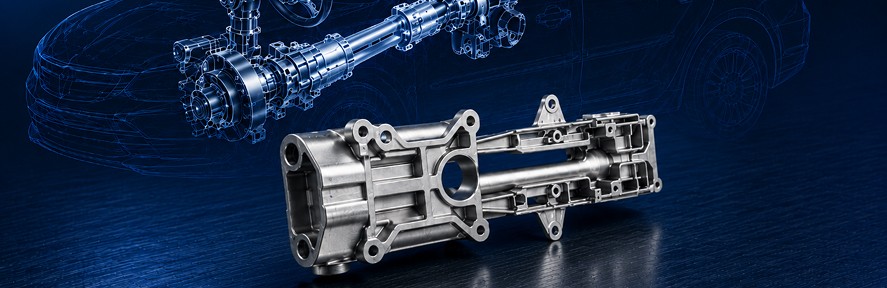
Superior NVH (Noise, Vibration, Harshness) Performance
- Higher damping capacity compared to other materials
- Casting design allows for more custom tuning to meet NVH targets
Measurable Benefits:
- Noticeably quieter cabin environment
- Lower vibration transmission through the chassis
- Elevated perceived vehicle quality and ride refinement
High-value applications:
- Instrument Panels
- Steering column and wheel assemblies
- EV platforms—where reduced powertrain noise makes road and
structural vibrations more perceptible
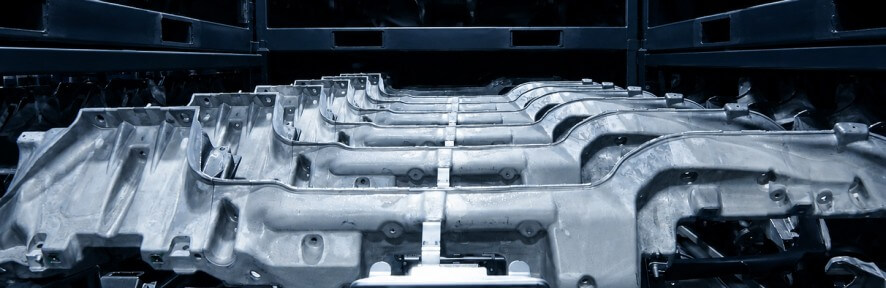
Accelerated Production Cycles & Efficiency
Key material properties driving speed:
- Lower latent heat of fusion compared to aluminum
- Significantly faster solidification times
HPDC cycle times are substantially shorter than aluminum, delivering:
- Higher throughput and production rates
- Lower per-part cost at volume
OEM advantage:
Purpose-built for high-volume automotive platforms where cycle time is a critical cost driver.
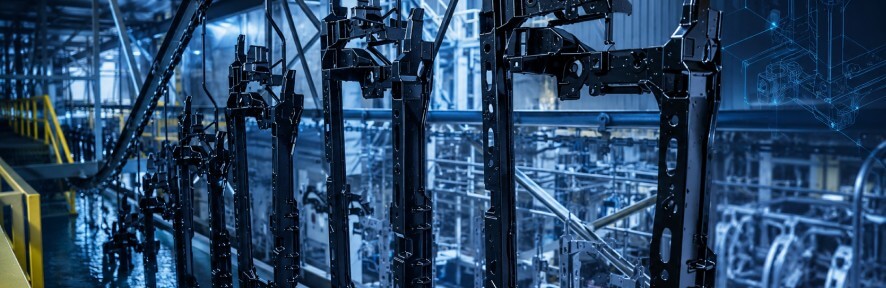
Corrosion Protection and Joining Technologies
Once a key concern, corrosion resistance is addressed through:
- Current magnesium alloys that match or exceed Aluminum
when it comes to resisting general corrosion - The development of new alloys that support emerging applications
and deliver stronger performance
Proven surface treatment systems:
- E-coating (electrodeposition)
- Powder coating
- Plasma electrolytic oxidation (PEO)
- Galvanic isolation design practices to prevent dissimilar-metal contact
- Advanced joining methods that minimize corrosion risk at interfaces
These advances have unlocked adoption in exterior-adjacent and underbody applications—areas previously off-limits for magnesium.
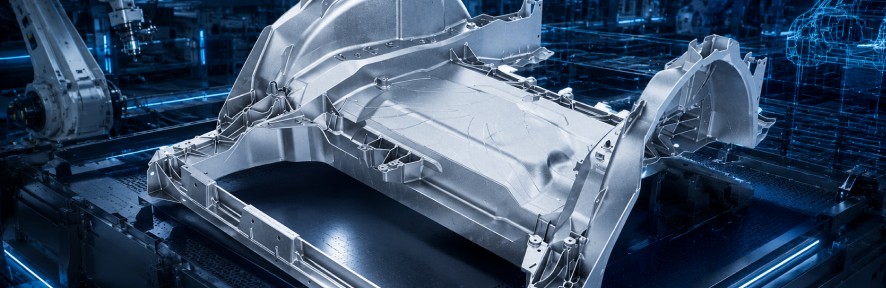
Alignment with Automotive Megatrends
Magnesium HPDC sits at the intersection of the industry’s most powerful forces:
- Regulatory lightweighting mandates driving material substitution
- Electrification demanding range optimization and battery weight offsets
- Large single-piece structural Mg-A™ castings replacing multi-part
assemblie - Sustainability targets requiring measurable lifecycle emissions
reductions
OEMs and Tier 1 suppliers increasingly position magnesium as a strategic lightweight material—no longer a niche alternative, but a core element of next-generation vehicle architectures.
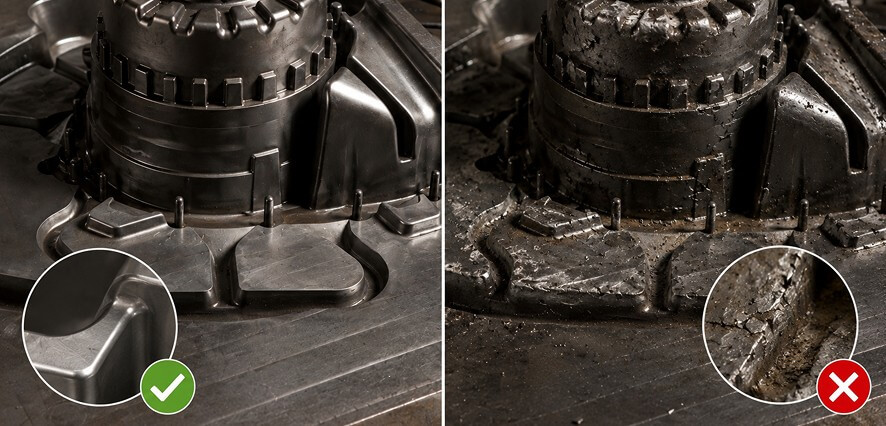
Extended Die Life vs. Aluminum HPDC
Magnesium is fundamentally less aggressive to die steel than aluminum—
both thermally and chemically—resulting in substantially longer tooling life.
- Lower casting temperature reduces thermal shock on the die
- Minimal die soldering compared to aluminum alloys
- Significantly reduced mechanical & thermal fatigue on die surfaces
Result: dies for magnesium typically last 1.5× to 3× longer than equivalent aluminum dies, depending on part geometry and process controls—a major driver of lower total tooling cost.